Certificates Of Evaluation
Coa
- If a peptide item includes a set or lot number that matches the documents, purchasers can much better comprehend whether the data really comes from that item.
- COAs matter since they show how eager a vendor is to provide useful documentation.
- By pairing good storage with mindful review of the CoA, labs can stay clear of shocks that could reduce a project right after the new year.
- Whether interior or external, all testing needs to be performed in controlled lab environments under set procedures.
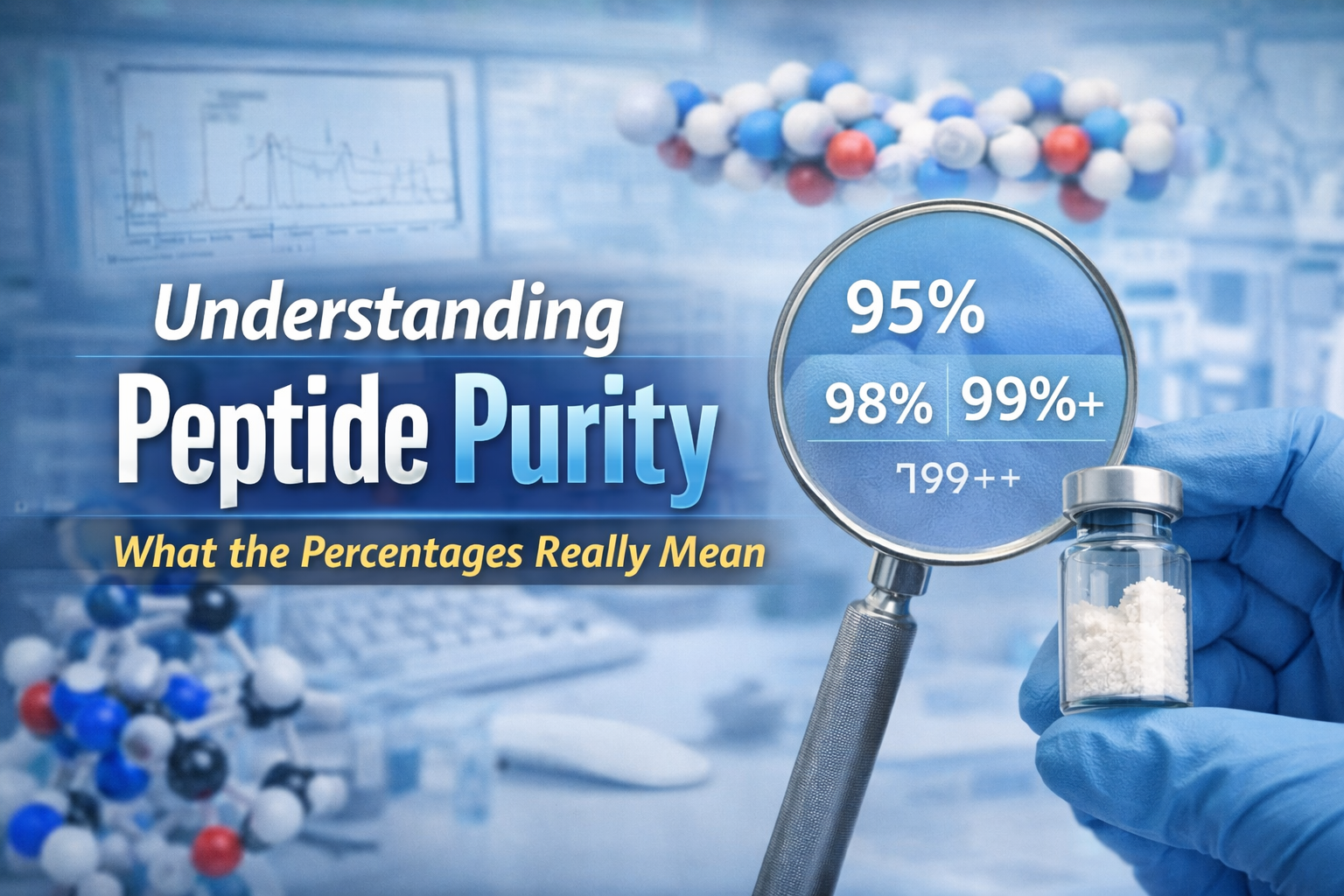
HPLC can assist explain pureness, while LC-MS can add beneficial identity-related context when available. HPLC, or High-Performance Fluid Chromatography, is among the most typical logical approaches made use of in peptide documents. In easy terms, it aids demonstrate how much of the sample looks like the main substance compared with various other observable parts in the chromatographic profile. This is why HPLC is commonly utilized to report purity percents on a peptide COA. It is important to comprehend that a COA is just useful when it is complete, understandable, and linked to the precise item being sold. A file with missing days, unclear methods, or no set recommendation provides purchasers less confidence in the traceability of the material.
In simple terms, it is an analytical method commonly used to evaluate peptide pureness by dividing elements in an example and estimating how much of the example matches the main target substance. Chromatograms present heights representing observable molecular components in a sample. Throughout peptide purity testing, the primary peak usually represents the target substance, while smaller sized peaks might stand for added observable elements. Third-party screening refers to logical verification conducted by an independent lab. When third-party checked peptides are examined externally, the screening company runs separately from the provider of the substance.Welcome To The Certificate Of Evaluation (coa) Web Page For Blend Peptides
A COA gives measurable laboratory information instead of basic descriptions. Researchers can assess the testing results directly, allowing them to examine the logical attributes of the compound. This dedication to quality control not only safeguards the stability of study but likewise boosts the reliability of the scientific work carried out utilizing our products.Should Researchers Ask For A Coa Prior To Purchase?
Matrix-Assisted Laser Desorption/Ionization Time-of-Flight (MALDI-TOF) and Electrospray Ionization (ESI) stand for the two primary mass spectrometry methods utilized for peptide analysis. Both techniques ionize the peptide particles and measure their mass-to-charge proportion, creating a spectrum that acts as a molecular fingerprint. Some COAs include the actual chromatogram photo, which supplies visual confirmation of purity claims.What Is A Coa?
Item whole lot numbers can be located in the get more info upper right corner of product tags. PeptidePro Canada provides research-use-only products to customers in Canada. This is a much more powerful analysis technique than staring just at one percent number and overlooking the remainder of the record. Analytical values such as pureness percent and retention time can differ somewhat in between production runs. In most cases, self-confidence comes from the overall pattern, not from one document alone. Buyers must also take notice of whether the provider gives supporting details past a file upload. Constant paperwork throughout different items is typically a stronger signal than one sleek data on its own. When a paper looks chopped, obscured, or excessively common, it may minimize confidence in the traceability of the information offered. Readability matters because customers require to assess what was tested and how the record connects to the item listing.